
Free sample · Lesson 115 min including practice
Look at brightness before color
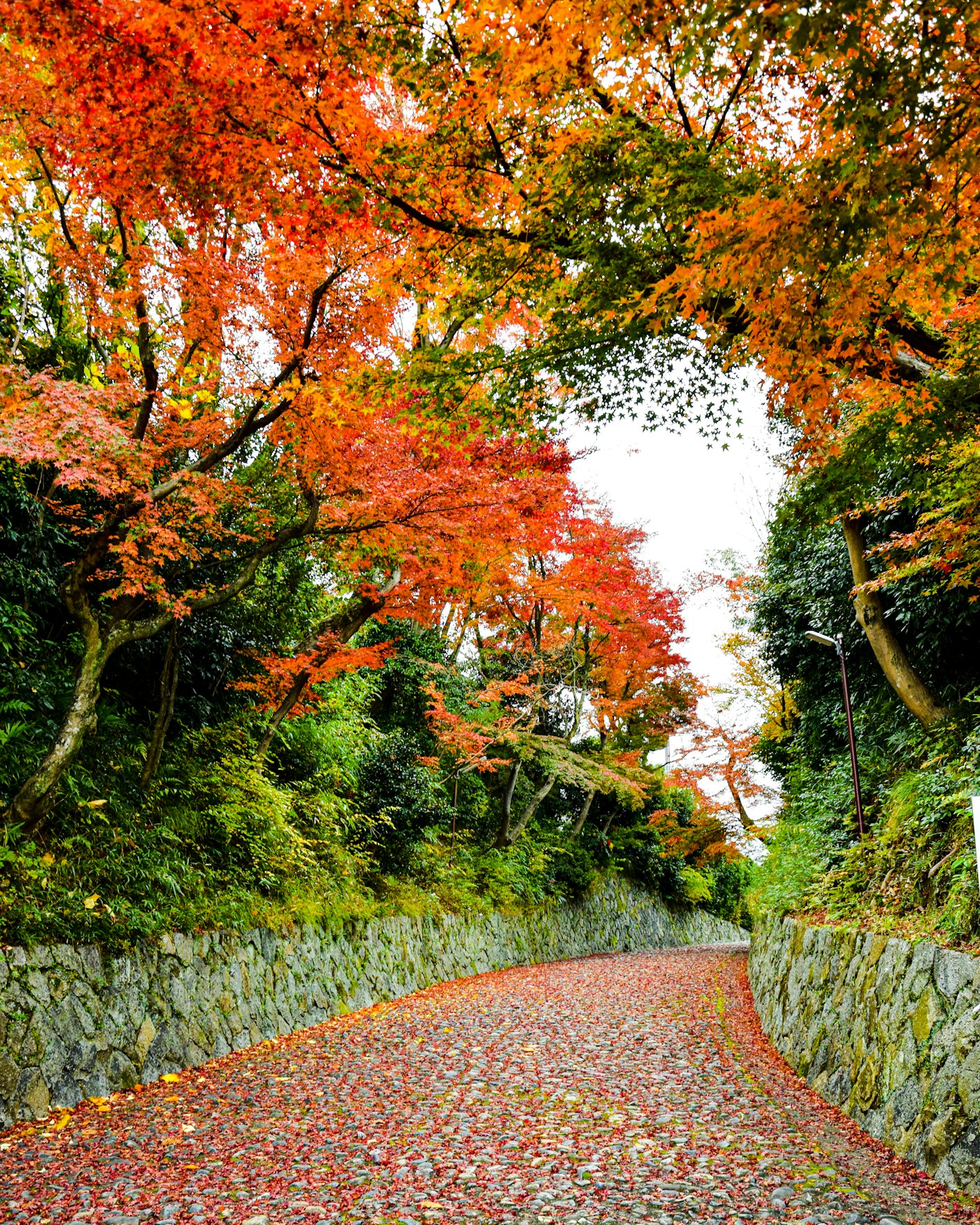
Separate the pull of autumn color from the pull of an opening in the canopy.

Cover the pale sky just right of center, then uncover it. Notice how quickly you find the bend in the path each time.
Locate the first stop for your eye
View the picture at postcard size. Look away and back, and name the first area you notice. Now follow the stone walls to the bend in the path. If the path is your subject, use that bend as a visual target for the rest of the edit.
Temporarily turn saturation all the way down. The pale sky still contrasts with the dark branches beside it. If a red cluster now almost disappears into its surroundings, color accounted for some of its earlier pull.
Make a highlights-only edit
Restore color on a fresh copy and lower highlights slowly. Toggle the adjustment while watching the edges of leaves against the sky and the fallen leaves on the path. Stop when the opening recedes and the path still reads clearly. A flat white area turning uniformly gray shows no recovered texture. Back off and try trimming a little sky instead.
Try it yourself
- Take or choose a color photo with a bright window, sky, or reflection near your subject. Save the original and write down where you want the eye to land.
- Make two copies, one fully desaturated and one in color with only highlights adjusted. Keep the same crop and record the first thing you see in each version.
- Submit the three thumbnails side by side. Under the highlights edit, identify one texture you kept visible on the subject.
Review your work
- You can point to a specific boundary that still draws attention in monochrome.
- The color pair differs by a highlights adjustment alone, and you can point out its effect.