
Free sample · Lesson 118 min including practice
How much sky above a peak?
Move the top edge and compare how much weight the mountain and the sky carry.

Pale sky sits above the gray summit. The water below the mountain is much darker. Mask each end of the picture in turn and watch the mountain gain or lose weight.
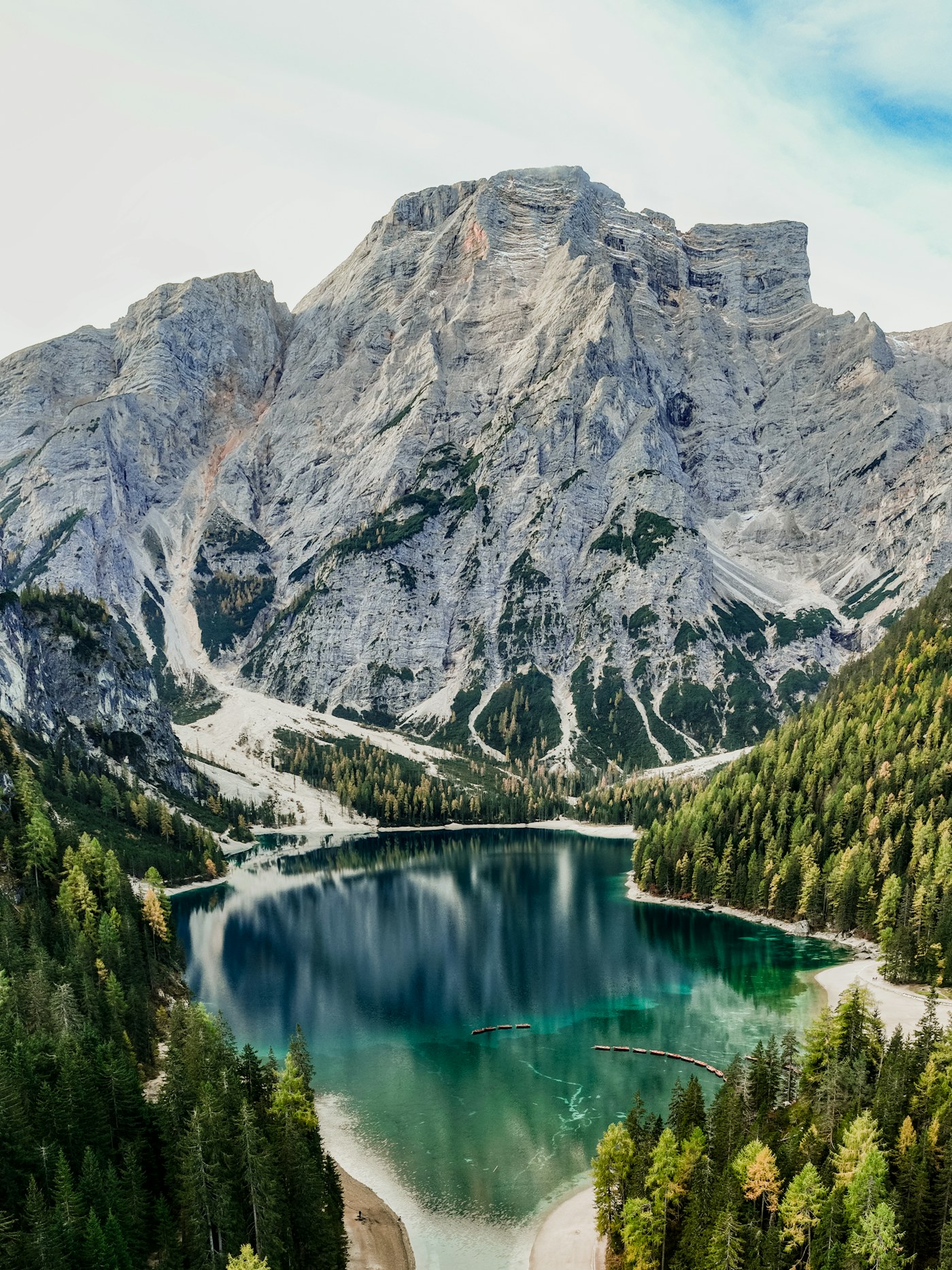
Look at the gap above the summit
Trace the ridge and look straight up from its highest point. There is little detail in that patch of sky, so the outline reads clearly. Negative space can have color and texture and still do this job.
Slide the paper down from the top until its edge touches the peak. Ease it back. Notice when you stop thinking about the near collision and start seeing the whole mountain again. That is one possible top edge.
Keep three edges fixed
Duplicate your own photograph and choose a freeform crop. Move only the top edge. Compare two versions at the same display width. If the other edges move, unlock the aspect ratio or mark the crops with paper on the original.
Shrink both versions. Can you still see a gap? If you prefer the looser crop, point to what the extra space contributes. If you prefer the tighter one, identify what you were glad to leave out.
Try it yourself
- Photograph a tree or a bottle with its top intact and extra room around it.
- Make two copies. Bring one top edge close to the subject. Leave a visible band of space in the other.
- Compare the copies side by side. Choose one and write what you would lose by cutting a little farther.
Review your work
- Both versions share the same side and bottom edges. The subject is shown at the same scale.
- At thumbnail size, you can point out a difference and tie your choice to a particular outline or patch of background.